
In This Video:
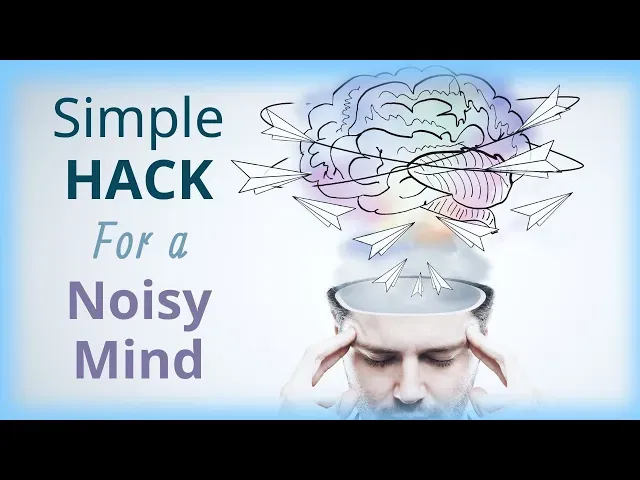
A seeker describes the effort and frustration of trying to drop thoughts. Instead of offering another technique for suppression, Rohan provides a counter-intuitive instruction: stop resisting and let the thoughts 'go for a run.' This act of non-doing shifts the practitioner from the identified thinker into the Witness. By allowing the mental noise (The Mitoté) to exhaust itself without the fuel of resistance, the underlying silence is naturally revealed. This session dismantles the common agreement that spiritual progress requires effort, reframing it as an effortless recognition of what is already present.
- Where do I apply force in my practice, believing that effort will lead to silence?
- What is the underlying fear that prevents me from fully allowing the 'Committee' to run its course without my interference?
- Can I locate the 'I' that resists thoughts? Is this entity separate from the thoughts it resists?
- How does the pattern of 'needing a conceptual answer' manifest as a subtle form of resistance to the silence that is already present?
- What happens when I reframe the 'Mitoté' not as an obstacle to be overcome, but as a phenomenon to be witnessed without ownership?
TRANSCRIPT
[00:00:10] Firstly, I think, there's a little question around I feel like it's been taking a fair bit of effort to just keep dropping thoughts and, like, not following them. [00:00:27] Like, there's moments where it just feels like it would be easier to just go, oh, this is too hard, roll, roll, roll, roll around in the thoughts. [00:00:47] Do you know what to do then? [00:00:49] Do what? [00:00:51] Do you know what to do then when you're in that situation? [00:00:55] Do you have it in your toolkit? [00:00:58] No. Well, like, I think since retreat it's been it's been, like, I've seen that and gone, oh, okay, that's just a, like, a defense or whatever, and come back. But, if I... [00:01:13] No. Yep. I'll say it for anyone else, just let the thoughts go for a run for a while. Okay, go for it. Go for a run. It's all yours. My mind is all yours. Unquote, unquote. Go for it. [00:01:30] That's the solution tonight. [00:01:36] See what happens. [00:01:39] Anyone have that problem sometimes? Okay, anyone not have that problem sometimes? [00:01:44] I've definitely found in the past, oh, well, I've given myself leeway and just like, let and gone, okay, cool, it's like, and just like let them run. [00:01:55] Not even give them, not give them like complete go for it, you know? [00:02:00] Just try it. Just not even like halfway, okay, I'll just go for a ride. Like, no, I want you to just go for it, run around like a lunatic, thoughts, go, let's go. Really encourage them to have a run. [00:02:15] Have you tried that? [00:02:16] Yeah, and what I was going to say is that I'll probably end up forgetting to come back for quite a while. Get lost down the... [00:02:24] Or have you, I would try it first and see what happens. Really try, try it. [00:02:32] And see if that's required. [00:02:36] And also is that, cause I get the sense that it will take effort until it becomes the new program or, like, to be quiet. Is that... [00:03:03] It's effortless. It's a, it's not a doing, it's a non-doing. [00:03:09] So all truth isn't, true, true is in the direction of non-doing. Or surrender, or drop it, or let go. Whatever group of sounds work best for you. [00:03:29] Same thing. [00:03:31] So it's effortless. So it's an effortless dropping. You can't force it, that's resistance. Resistance is the problem. [00:03:42] So it's counterintuitive. Yeah. [00:03:47] So, in a way, that thing I just said, in a way, is it's a little bit of effort in there because you've had a little if you've put a thought in there or thoughts come in and says, okay, go for it, let go. But it's also a let go too, isn't it? Go for it, run. [00:04:02] You want to own the space, own the space, go. [00:04:08] And, and let it exhaust itself like a, like a dog running around a park. It comes back exhausted. And it just sits here. Good. [00:04:24] The resistance sort of in a way keeps helping the thoughts push out. The more you resist, the more you create, as we see all the time. [00:04:33] And cause that's like a thought in itself, which is where sometimes I get confused cause I'm like, hang on, but is that... [00:04:39] Well, what's a thought in itself? [00:04:41] Um, well, uh, to say like, drop it, or come back to sound. [00:04:49] Oh, yeah, but it's a, it's a, it's a tool. [00:04:51] It's a bridge until it's unrequired anymore. And you never know if you're ever going to need it again. You never know when a thought's going to come through. [00:05:03] Anyone saying they're never going to have a thought again? I don't know, it's a, it's a big call. Isn't it? I hear people say that, but I'm like, oh, well, how can you really, really know? Just now. You know what I mean? [00:05:15] And you then you might be thinking, oh, well, I haven't had a thought for a week. Or well, yeah, but it doesn't mean in two years a thought's not going to come. It's ridiculous, right? You don't know. [00:05:27] You can always use that tool, drop it, let go, surrender. If it gets out of hand, okay, go for a run. It's all yours. The stage is yours. Let's see what you've got. Let's see what you've got then. You're the witness of it again now. [00:05:42] Hmm? You're now watching the thoughts flood by. [00:05:47] Make sense? Instead of you have returned to witness of tons of thoughts. [00:05:56] That will exhaust. [00:06:02] Yes, so you drop in back into witness again. Not by resisting the thoughts, I need to stop them. I can't do this. What's wrong with me? Oh, my goodness, they're still going. And all that stuff. Just drop it. [00:06:17] And, okay, go for it. I'm going to drop all that resistance and let these thoughts go and remain the witness. I have nothing to do with you. So you can watch them. [00:06:33] They have nothing to do with you, and they're not you. [00:06:39] When you listen to a radio in the car at the traffic lights in the, in the, in the car next to you, and you're hearing the person listening to the radio, what have they got to do with you? That noise, anything? [00:06:58] It's no different. Other than our choice or our concept that it is different, that it is us. Ideas, uh, handed down ideas, incorrect. [00:07:15] And then you can even use another technique would be self-inquiry, from where does this thought come? Where does it go? It's finished. Where is it now? Where does it come from? Where does it go? [00:07:34] It comes and goes to something. It comes and goes to silence. All noise comes from silence. It's the background. [00:07:45] You could also go, who's having this thought? [00:07:59] Does it ever tickle your fancy and you sounds like the old one does? I don't know. [00:08:02] Oh, cuz then I repeated then. I think there's a, yeah, cuz like, who's having that thought? And then I repeated, who's having that thought? You know? And it just never ends. [00:08:17] Yeah. [00:08:31] Well, but it's the same, it's the same question though, isn't it? And the same answer. [00:08:37] It doesn't matter how many times you that on top of the answer is the same. It could be a hundred deep and it's still the same answer. [00:08:55] Is a good question though, like, who's having that thought? Who's having that thought? There you go. [00:09:03] But really, the answer is silence to that question. Cause you're looking, who's having that thought? And you, you're not going to find anyone if you're truly looking. [00:09:18] So, it's the end of the questions. It's the last question. [00:09:35] Hmm. Yeah. I think there's a part of me that gets trapped, or my mind that gets trapped in really trying to find the answer. Like just getting like nothing. [00:09:47] What to stop that. Cause there is no answer. [00:09:53] And there's no one to find the answer. There is nothing the mind cannot cognize. It's the absence of mind. [00:10:02] And it's like, and it never gets very far. It's just like, feels like pain. [00:10:06] Yeah, because it's at the end of the road. It's on the cliff edge. [00:10:14] It's now it's in conflict, what to do, what to do. [00:10:22] Grind. You know? Let go. Who's grinding the mind? Whose thoughts are these? [00:10:48] Has it been answered, the questions or not? [00:10:50] Yeah. Yeah. [00:10:55] If not, speak. [00:10:56] No, no, no, no, no, it has. I think just like the main point is, I didn't even know the question. All I know is that there's just, just like, it just doesn't make sense, but, yeah, there's, I don't know what to ask or... [00:11:10] Okay, yeah, it probably doesn't make sense. Yeah, that's right. [00:11:13] And you answered it perfectly that there is no answer, and that's why it doesn't make sense. [00:11:17] Bang. So, let go. Same answer again. [00:11:28] Yeah, who needs an answer? From the root, all the questions are rooted in I. Yet the I, we see over and over, is where. [00:11:47] What can quite happen when we're talking on a subject and and we see it a lot and then it then something goes, oh, that's terrible. And then we think this is us. [00:12:06] But we're not that either. No, that's not it either. [00:12:30] You see, so we'll keep this little spare voice in our pocket to pull out. As if it's us, and that's not us either. That's not it. [00:12:53] Then it'll say things like, that's sad, and I'm like that. As if that's that's you saying it. [00:13:14] You like that, do you? So, drop it, remain the witness, let go, surrender, acquiesce, accept. All kind of the same thing, aren't they? Give up. Give up having to know. [00:13:34] You don't have to know. You can't know. The answer is silence. What's the mind going to do with that?
GLOSSARY
-
The Mitoté (The Fog)
The incessant, chaotic internal noise of the mind; the fog of thoughts and emotional reactions that obscures the clarity of Direct Presence. -
Resistance
The act of applying force against what is. In this context, it is the effort to stop or control thoughts, which paradoxically fuels and sustains them. -
Non-Doing
The state of effortless being; the cessation of forceful intervention with the mind. It is not passivity, but an active surrender of the impulse to control. -
The Witness
The impartial, unconditioned consciousness that observes all phenomena—including thoughts, feelings, and sensations—without identification or judgment. -
Letting Go / Surrender
A practical instruction to cease resistance and drop identification with mental-emotional states. It is a dissolving of the ego-structure's grip. -
Self-Inquiry
A Direct Path tool using questions like 'Who am I?' or 'Who is having this thought?' not to find a conceptual answer, but to turn attention back to its source, revealing silence. -
Bridge Tool
A temporary instruction or concept (e.g., 'drop it') used as a skillful means to shift from a state of identification to one of witnessing. It is used only as needed and then discarded. -
The Committee (Ego-Structures)
The collection of conditioned voices, beliefs, and identities that constitute the perceived 'self.' Allowing them to 'run' is to observe their activity without believing you are them. -
Direct Seeing
The unmediated recognition of reality as it is, free from the interpretations and filters of the mind. It is seeing without the 'seer'. -
Cessation of Suffering
The natural result of dismantling the ego-structures and ending identification with thought. It is not an achieved state of peace, but the absence of self-created conflict.
“There’s nothing to add. What you are is prior to beliefs, thoughts and labels.
Here we explore and unveil the ultimate mystery of non-dual being.
Reality.”