In This Video:
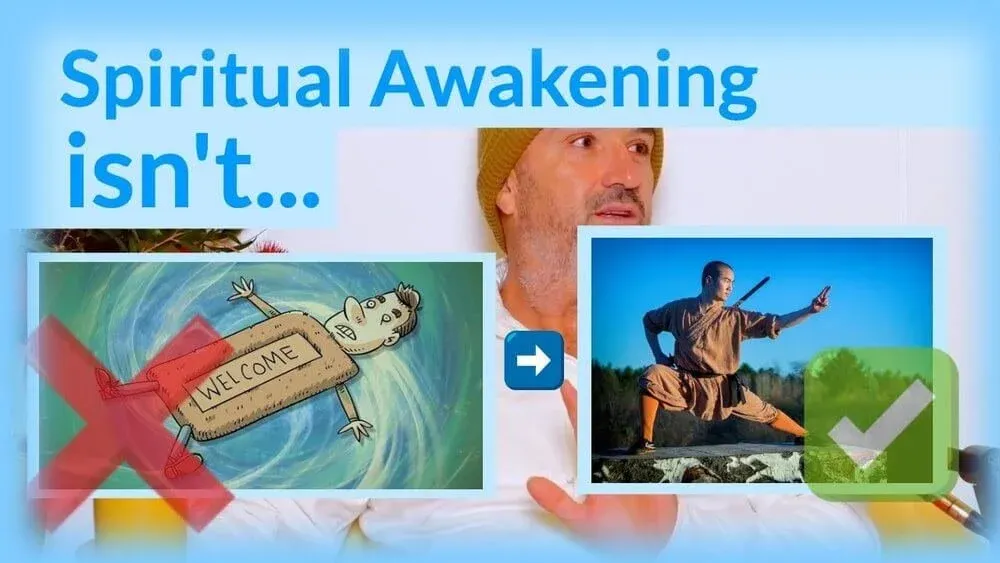
Rohan provides an engineering-based approach to deconstructing the ego-structure, identifying it not as a real entity but as a complex of unexamined agreements and patterns. He dismantles the common trap of 'self-improvement,' reframing practices like positive thinking as mere stepping stones. Using the ancient model of the three Gunas, he explains that positive thinking can shift the mind from Tamas (heavy inertia) to Rajas (active energy), but the ultimate goal is Sattva—the state of peace and clarity that arises from the cessation of thought, or 'no-mind.' This is achieved not by improving the 'I', but by dismantling the illusion of its existence through direct, fact-based inner science.
- Where in your life are you trying to 'improve' an ego-structure instead of seeing it as a pattern to be dismantled?
- Rohan describes the 'I' as a series of agreements. What is one core agreement about yourself that you have never questioned?
- Observe your internal dialogue. Is it a tool you intentionally use, or are you a puppet reacting to its momentum?
- Positive thinking is a skillful means to move from Tamas (heaviness) to Rajas (liveliness). Can you identify which state your Committee predominantly operates from?
- What would remain if you completely let go of the assumption that your thoughts define 'you' or are factually true?
“There’s nothing to add. What you are is prior to beliefs, thoughts and labels.
Here we explore and unveil the ultimate mystery of non-dual being.
Reality.â€
TRANSCRIPT
[00:00:00] the more joy you have the less you think. [00:04:14] The less you think, the more joy you have. It's that simple. [00:07:33] The people just constantly in thought just like this. [00:11:06] Just like a slave. You're a puppet. [00:13:51] But the ego and your separation is a suffering mechanism. [00:17:34] Just because the 'I' thinks it's something doesn't make it actually real. [00:24:80] I'm not sure what we're going to talk about just yet, but sure something will happen. [00:31:73] I guess I could talk about perfection. [00:33:63] I do subtly that all the time. [00:36:69] There's no superman or superwoman here or anything like that. [00:43:65] It's not some mystical ethereal thing. There's a lot of exotica in this space where the cultural influences of... [00:52:43] if you know anything about this space to begin with or you just hear it of curiosity, I'm assuming you know something for now. [00:57:95] There's a lot of exotica in different cultures that's soaked into this, but really it's very simple. [01:02:86] It really is simple. [01:04:09] It doesn't mean the attainment of it is simple. It's actually quite complex, but it's only complex because we are so complicated. [01:14:14] We have years and years and years and years of training in how to be somebody special. [01:23:76] And so it's very simple for me to say this is very simple. [01:26:22] The complexity is in the I, in the you. [01:33:48] So, to leap from these complexities to this is very rare. [01:41:74] So that would imply there might be some inner work to be done. [01:47:39] Some self-examination, looking inwards, seeing what's going on inside us. [01:56:69] So I guess if you looked at it from a Jung perspective, Jungian, it's the shadow work, going in and finding where am I holding? [02:03:57] Because this is a complete let go. [02:06:08] It's a completely let go. [02:08:04] Whatever is is, and actually is is. [02:11:64] How can it be otherwise? [02:13:30] Just consider that for a moment. [02:17:34] Right now is. [02:22:42] If you can imagine a pond with a different, unusual shaped outside and you drop a pebble in it, the wave goes out and it hits all these different angles and it comes back and in some places it arises. [02:38:09] Where all the waves meet together and you can look at that as now. [02:42:99] So you can only be here now based on your history that your conditioning. [02:48:88] I'm not speaking Chinese here. Why? [02:51:30] I wasn't raised in China. It's that simple. [02:55:58] So I don't need to be exotic. I can just be as I am. [03:08:34] And we can all be as we are and we will all be a different representation of that. [03:19:43] That being the prior to your first name, to me, to I, to separation. [03:27:85] So the I, if you simplify it down, it's a series of ideas and inner contracts or agreements that we've made and been given over a long period of time that makes us me. [03:41:74] but really it's a series of events and a series of memories enacting. [03:49:15] There's no you in it. [03:51:65] It's just patterns. [03:57:07] And if I can leapfrog a little bit here, I can say that there never has been anybody here ever and never will be separate from that that we are. [04:07:65] It's not possible. [04:09:66] It can only be imagined. [04:25:34] just because the I thinks that something doesn't make it actually real. [04:33:48] We think we're somebody, doesn't mean that becomes true now. [04:36:97] I could think I'm a giraffe. It doesn't make it true. [04:40:99] You can think you're separate, doesn't make it true. [04:45:26] And just because you're completely convinced by the thoughts, doesn't make it any truer. [04:51:71] Just because you've never checked your thoughts, if you've never gone along and checked your thoughts and wondered where they came from or if they're even you, then you you're firmly locked in the eye, in the separation, which is illusion. [05:16:34] And so a lot of this work is undoing that and finding out why have I put this together? [05:22:31] How did this get put together? And understanding it. [05:25:56] And luckily the end result of of this factual inner science, it is very scientific because it's absolutely fact-based. [05:36:03] If you keep following the rabbit down the rabbit hole, so to speak, everybody ends up at the same conclusion, any culture. [05:47:79] The mystics, the Sufi mystics, the Buddhists, the Christian mystics, et cetera, et cetera, et cetera. [05:54:19] There's always these main, the mainstream version, then there's these original sort of knowings parts of these religions that are actually accurate. [06:03:77] And they find the same thing. They say it in a different language. [06:06:55] They explain it differently. [06:08:92] They look differently when they do it. They have robes and different dress outfits, but it's the same thing they're talking about because it's a factual discovery. [06:19:42] It's not a separation imagination of this God, that God. It's just follow the facts back. [07:04:81] Yes. [07:06:95] You can have very negative dialogues so that you could switch to positive, right? [07:12:47] Yeah, if you're interested in going all the way, then you can use it as a stepping stone. [07:21:40] Um, so negative thoughts are just really self-harming, right? [07:26:54] towards yourself and others. Okay. [07:29:20] So, yeah, sure. If you can't get the mind to quiet and you can switch it to a much more positive viewpoint, right? That's absolutely fine. [07:38:39] But we have to understand the ultimate goal is no mind, right? [07:42:25] But as a stepping stone, fine. [07:44:48] That's what self-help is, right? [07:46:89] but self-help is a funny word because it's an I improving itself. [07:50:88] So okay, the I can improve itself or its dialogue can improve, but it's a stepping stone to quieting the mind, right? [08:00:33] It's makes sense? [08:06:21] the attachment. [08:07:01] Well, yeah and just the the weight that the negative thinking brings, just brings a lot of weight as opposed to positive thinking or or karma thinking, just doesn't it has a weight to it. [08:17:34] It has a Thomas to it in in Hindu culture, they call it Thomas. [08:21:55] Negative thinking has a heavy Thomas, which is a weight. [08:26:94] So just getting into positive thoughts we're heading more towards rajas and just liveliness, [08:36:03] and from rajas we can go to satva, which is peace. [08:40:48] So they say there's three energies, the three gunas. [08:43:55] If you want to simplify things, so most people are living in Thomas, their minds are constantly thinking and it creates this heavy weight they carry and it makes them miserable. [08:53:77] get to rajas. Yeah, learn to live in rajas, liveliness, which is, you know, changing your thoughts, quieting your thoughts. [09:03:09] And then from there you can go to satva, which is peace. [09:06:40] But you can't go from Thomas to Satva. [09:08:92] a stepping stone there. [09:11:00] This is very old knowledge. It's thousands of years old. [09:14:75] Hasn't changed. [09:17:66] You know, we're sitting here in 2025. There was people sitting around in 2500 BC. [09:25:21] That's when they started remembering or written, someone wrote it down, it could be 10, 12, 15,000 years old. [09:32:00] Hasn't changed. [09:33:57] Humans are still the same. [09:34:72] Same problem. [09:36:69] Same answer, same three energies. [09:42:61] There was somebody sitting here saying the same thing a long time ago in a different language, from direct experience. [09:53:73] with the calibration that okay, I'm pulling myself from the shadows to to a more light state. [10:09:41] So even hearing the words may encourage somebody to go, okay, maybe I should try and quiet my mind. [10:17:15] Maybe it's true. Let me just check. [10:19:18] Let me check for myself and forget about about everybody else and what they're saying but let's just see if that's true or not. [10:24:26] And if it's not, then what have you lost some time? [10:31:07] So it's very simple. [11:11:80] We grow up in a neurotic we're mine, me, compete, win. [11:17:53] You're the king. Be number one. [12:04:14] to have unchecked thoughts is normal. It's just exactly what we were taught to do. [12:08:92] And nobody's told us. Nobody told me, I never heard, I never heard anything like this till I was like 24 or 25. [12:17:15] The first thing I heard was, 'Oh, you can actually adjust how your mind works and you can improve yourself.' [12:21:18] What? [12:21:84] I didn't know that. [12:22:90] That's how stupid I was. [12:38:09] and it's no one's fault. It's just the system educates us in a certain way. [12:41:40] We learn to do that way, and the teachers are unconscious, the society is unconscious, the politicians are unconscious. [12:49:59] How the hell's are we not going to be that way to think that thinking is normal and to have unchecked thoughts is normal. [12:53:99] It's just exactly what we were taught to do. [12:59:04] Nobody's told us. [13:00:15] Nobody told me, I never heard anything like this until I was like 24 or 25. [13:07:07] The first thing I heard was, 'Oh, you can actually adjust how your mind works and you can improve yourself.' [13:10:87] What? [13:11:59] I didn't know that. [13:12:75] That's how stupid I was. [13:14:87] So, there you go.
GLOSSARY
-
The 'I'
The ego-structure; a collection of memories, domestications, and inner contracts mistaken for a real, separate entity. It is a suffering mechanism based on an imagined separation from what is. -
Inner Engineering
The systematic process of self-examination and deconstruction of the ego-structures. It is an inner science based on observable facts, not beliefs. -
Shadow Hunting
The process of looking inward to find where one is 'holding'—the specific patterns, agreements, and psychic weight that create the illusion of the separate self and cause suffering. -
Agreements
Unquestioned beliefs and inner contracts, often installed by society and upbringing, that form the foundation of the ego-structure. To break them is to dismantle the 'I'. -
Direct Realization
The immediate seeing of reality as it is, without the filter of the 'I' or its thoughts. It is the end result of deconstruction, not a gradual attainment. -
The Three Gunas
An ancient model describing three fundamental energies: Tamas (inertia, heaviness), Rajas (dynamism, activity), and Sattva (clarity, peace). -
Tamas
A state of mental inertia and psychic weight, characterized by negative, repetitive thinking. The default state for an unexamined mind. -
Rajas
A state of energy and activity. Can be a useful shift from Tamas (e.g., positive thinking), but is still a state of mental motion, not peace. -
Sattva
The state of peace, clarity, and stillness beyond the mind. The goal of moving through Tamas and Rajas; the natural state when the Committee is quiet. -
Fact-Based Reality
The direct experience of what is, prior to interpretation, imagination, or the stories of the 'I'. The undeniable truth all mystics discover, regardless of culture.