
In This Video:
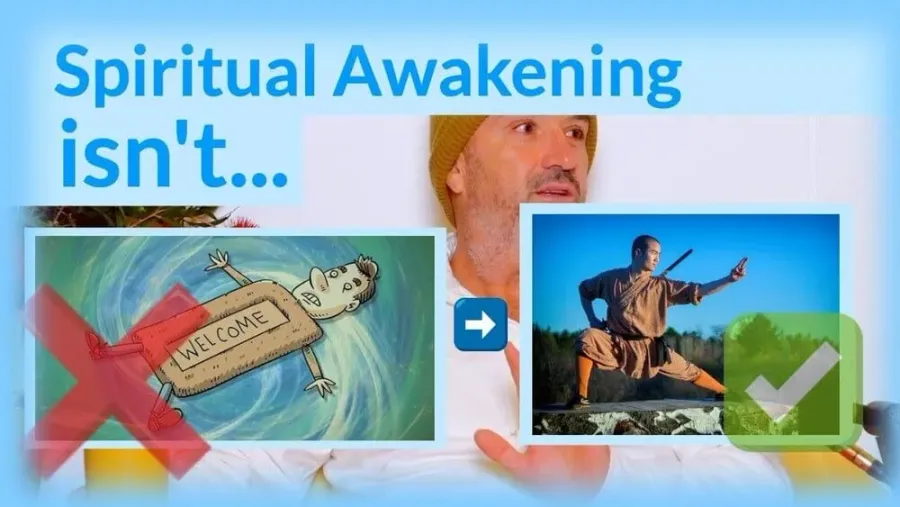
Rohan provides an inner engineering guide to dismantling the 'Mitoté,' the Toltec term for the committee of six characters operating in the mind. He identifies the 'Judge' as the primary trigger that activates the others, particularly the 'Victim,' creating a self-perpetuating cycle of suffering. The method for deconstruction is not to fight or control these voices, but to become a third-party witness through Direct Presence. By returning to the breath and observing innocently, a space opens, consciousness widens, and the hypnotic identification with these fraudulent identities is broken.
- When the 'Judge' speaks, what is the immediate physical sensation that follows?
- Which of the other five characters (Victim, Rebel, Princess) most often follows the Judge's verdict in your internal narrative?
- Can you recall a time a purely functional judgment (e.g., driving) morphed into a fear-based, irrational one? What was the trigger?
- What activities or states cause your 'Committee' to take a lunch break, and what is the resistance to abiding in that space without stimuli?
- How has the assumption 'That is me' attached itself to the voice of the Judge, and what would happen if that agreement was broken?
“There’s nothing to add. What you are is prior to beliefs, thoughts and labels.
Here we explore and unveil the ultimate mystery of non-dual being.
Reality.â€
TRANSCRIPT
[00:00:00] as a third party witness, we are the observer of these characters playing out.
[00:05:911] Not the controller,
[00:07:371] not the stopper.
[00:10:911] We don't become the hater, which is one of the characters again, or rebellion. We don't use one of the characters against the characters, we let it all go and we observe innocently.
[00:20:411] And we return to our breath, the, and we witness the breath.
[00:25:211] Instead of the characters playing out, we can witness the breath, for example.
[00:31:391] And in the reduction of the noise and and the understanding and the following of the characters,
[00:37:041] uh, consciousness starts to seep in, our deepest starts to seep in and widen, the the tiny little gap
[00:45:741] in our heart, and it starts to open up and open up and open up and consciousness gets wider.
[00:53:304] So I'll talk about the judge a little bit.
[00:56:564] You know, in the Toltec mitote, you have a
[00:59:174] mitote meaning the committee, like, we have a committee in our heads, and there's different characters. If you start to become more aware and you open up, you can start to see different um,
[01:07:954] characters that play in the head, different voices.
[01:12:354] When you break it all down, there's only six of them and one of the main one,
[01:16:924] remarkably, right, it all seems so complicated, but really it's just six things intertwining, ultimately.
[01:24:874] So as a six-stranded rope, you might say, or a six-stranded knot,
[01:28:994] or a series of knots.
[01:30:174] And so when you start
[01:34:104] uh going within and and and seeing what's going on, one of the techniques that the Toltecs use, which is incredibly powerful, one of the most incredible things I found, technologies, was the mitote.
[01:45:004] And the judge is the the main character. The judge and the victim are the, are the really, the big players in this. And the other four characters branch off from that.
[01:53:934] They call, they require, usually require the judge or the victim to get them up and running.
[02:01:434] Hm, especially the judge. Judge is the number one.
[02:09:414] And the judge
[02:10:854] can, is, is
[02:13:954] in within each, uh, being,
[02:17:344] each person,
[02:19:924] can only work really from history, from its personal history.
[02:28:134] Its cultural history, it's
[02:31:694] and what that person came in with. I I I say it all the time, two identical twins can come in
[02:37:114] to the same family, grow up next to each other, same school, same everything and have very different personalities. One'll be dominant,
[02:43:754] one'll be subdominant. They'll have different different aspects. One may be more artistic, one may be more logical, etc, etc. So you come in with certain stuff.
[02:51:754] They can be treated identically.
[03:11:794] So, the judge is coming from its history and and a biology. Let's call the, uh, thing we came in with our biology, yeah.
[03:19:644] And um, our previous history, the body memory,
[03:23:444] and and the culture. And then from there, the judge goes forth observing or stimuli happens within or from without,
[03:33:634] and the judge cognizes this,
[03:38:154] and then makes a judgment, whether it's on that person, that thing, the event.
[03:45:904] And um, if if if the person has a victim orientation, in comes the victim story.
[03:50:584] Yes, this event, this this series of events, this what's going on here, this feeling within me,
[03:56:494] whatever it is, makes a judgment. And then the victim can come in and go,
[04:01:734] "This isn't okay."
[04:03:094] "I'm not okay with this."
[04:07:614] This is, and then it might go, "this is their fault. They they didn't treat me right when I was younger" or "this happened or that happened" or,
[04:16:324] they shouldn't have kicked that goal. That, that
[04:19:244] goalie should have blocked that.
[04:21:404] And in comes the blame.
[04:23:594] And then if it continues and continues, it can turn to violence.
[04:28:654] But it all started with the judge.
[04:33:614] And then it can go off to the victim, it can go off into the rebel, the princess,
[04:37:124] the prostitute which is selling out, or the white knight. Yeah.
[04:40:914] We can branch off into our different voices and they all have their little story, then they can start feeding off each other.
[04:47:334] This thought goes to that thought, that the the victim comes in, the rebel can come in and go, "This isn't going to happen. I'm going to gossip about you."
[04:54:334] "I'm going to confront you."
[04:56:494] Or the princess can come in, "how can they treat me this way?"
[04:59:174] "I've done nothing wrong. I'm so innocent."
[05:01:934] And on it goes.
[05:05:324] Just intertwining and intertwining until we have all these knots, ropes, and then we tie knots with these ropes.
[05:12:004] And then we carry the knots around with us day in, day out.
[05:15:294] But the judge is the main character, isn't it? If we can reduce our judgment back to nothing, there's nothing for
[05:22:924] uh, the rest of the characters to play on.
[05:27:714] They have no uh there's been no trigger point.
[05:30:354] There's been no pivot point now.
[05:36:114] But to catch the judge, we have to be present.
[05:39:134] We have to be mindful and we have to slow our life down to see it and and really want to see it.
[05:45:074] Because the the thoughts of the judge and these thoughts, we're so addicted to, we're so used to the sound of them, we're so used to the sound of the characters that it's automatically assumed that they are us.
[05:54:684] That is me.
[05:58:704] And that assumption is the problem and that familiarity is also the problem.
[06:03:134] And and and how used we are that the stories they create and the energies they combine and create, we're so used to it.
[06:10:464] We're so used to this abusive relationship within ourselves.
[06:15:354] that we'll continue it unless we have a strong desire to overcome it. The only desire worth having is waking up, and which is a desire to overcome
[06:25:054] the ignorance within.
[06:37:674] So again, we return to the witnessing. We we return back to
[06:42:254] being highly observant.
[06:44:314] And as a third party witness, we are the observer of these characters playing out.
[06:50:884] Not the controller,
[06:52:194] not the stopper.
[06:55:624] We don't become the hater, which is one of the characters again, or rebellion. We don't use one of the characters against the characters. We let it all go and we observe innocently.
[07:05:364] And we return to our breath, the, and we witness the breath.
[07:10:044] Instead of the characters playing out, we can witness the breath, for example.
[07:16:034] And in the reduction of the noise and and the understanding and the following of the characters,
[07:21:494] uh, consciousness starts to seep in, our deepest starts to seep in and widen, the the tiny little gap
[07:30:454] in our heart, and it starts to open up and open up and open up, and consciousness gets wider.
[07:37:374] because we've stopped tying knots and roping ourselves up with the characters.
[07:41:404] And it starts with the judge.
[07:42:854] But now, the other side of that is, and the Buddha would have called that, um,
[07:48:694] right thought,
[07:49:854] or right insight, right intent.
[08:07:024] But we're also in in a world of judgment, aren't we? We have to judge
[08:11:794] "have we got time to get to work?"
[08:13:954] Is this car pulling out?
[08:16:924] You know, we have a lot of judgment to do all the time. We're continuously judging, especially when cars are going 100 kilometers an hour in opposite directions and there's all sorts of things going on. There's a tremendous amount of processing going on.
[08:28:834] That's a different type of judgment.
[08:30:114] It's required, it's essential.
[08:34:864] Do I need to have food tonight? I need to go shopping. These are these are judgments too, but these aren't the judgments I'm talking about.
[08:44:894] It's not a whiteout.
[08:52:334] The judgments are the ones that are irrational, and they come from your memory,
[08:56:454] and and and they're, they're usually fear-orientated.
[09:01:794] and harmful to you and everybody around you.
[09:06:914] They can be also called comparisons. You're judging yourself against other people.
[09:12:474] To see where you sit in the mix.
[10:15:584] And and the problem begins.
[10:18:234] Before that, just just sensation.
[10:22:244] Just sensation. Just now, with sensation. Sensation within the now.
[10:28:104] Very simple. Nothing going on.
[10:30:224] And then the judge comes in and goes, "I don't feel good."
[10:32:824] And it may not notice the sensation. It just go straight to, the thought comes from the sensation,
[10:38:394] or a group of negative thoughts can happen because the sensations in the body, but the person isn't sensitive enough to notice it, or aware enough to notice it.
[10:46:584] And and then we just head into bubbles of unconscious thought, unhappy thought.
[10:52:314] Or they might even be thoughts of
[10:54:394] "I need to do something powerful and special with my life," and rush out there and become famous or rich,
[11:00:664] or wealthy, or go and save the world,
[11:03:704] to avoid sensations also.
[11:05:954] It doesn't have to be negative, uh, stories. It can be extremely positive things.
[11:11:474] that can be driven by wounding.
[11:15:374] It all starts with the judge.
[11:25:464] The only way we can discover the judge is to lean, lean back into what we are, and observe, come to our breath and observe the thoughts and the sensations.
[11:35:054] This way they don't hypnotize us and take us over, and then we don't become them.
[11:39:624] We become an identity. The moment we head into a character, we become an identity.
[11:43:914] We become a fraudulent,
[11:47:334] uh, non-being,
[11:49:524] an illusion, an apparition,
[11:52:164] an idea separated from the now and beingness.
[12:00:794] And and and, s-, frankly we've been doing it so long, most of the population's been doing it so long that it knows no different.
[12:06:554] So this is very unusual what I'm saying. It could be very weird, but it's actually the truth. And the other stuff's actually really weird. What everyone's up to is very weird.
[12:14:874] Imagining you're something else.
[12:17:964] And going through your life in imagination,
[12:22:254] projecting out and projecting onto other people, judging, victim, all the characters.
[12:27:164] Just these things overlapping all the time, with occasional gaps when
[12:32:004] uh, intense situations arise, or you're completely in a meditative state or a mindful state, doing something you love to do.
[12:39:564] Your favorite thing, an adrenalizing sport. For a moment, that will part away, and you feel good.
[12:45:514] There might be adrenaline involved, but sometimes it's not. It's just pure mindfulness in the activity, and that parts, and you feel good, and you don't know why you feel good doing this activity. It's because the mitote stopped.
[12:57:124] A space opened up.
[13:05:394] The committee's having a lunch break.
[13:10:974] And you feel good.
[13:12:364] But you you you blame the hobby.
[13:14:494] or you blame the activity.
[13:16:354] No, that that would just the the stimuli to open up this space
[13:20:974] that we're all seeking, that we are.
[13:25:524] putting aside the adrenaline side, adrenaline's like an energy pumping through the system.
[13:30:184] Just talking about mindfulness.
[13:33:434] So, remain the witness and see the judge.
[13:37:604] And and and and and watch the the the the pantomime play out.
[13:44:594] It's a pantomime.
[13:46:174] It's like stage scene after stage scene after stage scene, and it's all happening in your head, and then it's interacting with other stage scenes around you,
[13:52:844] and it's just a cosmic joke.
[13:55:654] It truly is a cosmic joke.
[13:58:394] that appears so important.
[14:06:174] Only because of the importance you've put on it through ignorance.
[14:11:474] From what you got taught.
[14:15:374] So,
[14:16:894] you're taught, you believed, you came in with it.
[14:19:754] There's no personal here either.
[14:23:594] There's no personal here either in even in this problem. There's no personal.
[14:33:784] Anyone going,
[14:35:054] "Yes, I do that. That's terrible." Again, is in the mitote.
[14:38:704] It's not personal. There is no I
[14:41:094] that has a problem. There's a series of things overlapping that create a rope that we call the I, that's not real.
[15:00:814] I guess that's what we do, isn't it?
[15:02:184] So on that note, why don't we do that?
GLOSSARY
- The Mitoté (The Fog)
The constant, overlapping noise of six internal characters (Judge, Victim, etc.) creating a fog of illusion that obscures reality. A Toltec term for the internal marketplace of voices. - The Committee
Rohan's term for the six ego-structures or characters that operate within the mind, creating stories and identity. The Mitoté is the noise the Committee makes. - The Judge
The primary character in the Committee. It operates from personal history and cultural domestication, issuing verdicts that trigger the entire Victim-Judge dynamic and subsequent suffering. - The Victim-Judge Dynamic
The core energetic loop of suffering. The Judge condemns, and the Victim reacts with blame and self-pity, creating a self-sustaining narrative of injustice. - Direct Presence / Direct Seeing
Abiding as the third-party witness to the mind's activity, without interference or identification. It is not a practice of control, but of innocent observation. - Stalking the Self
The Toltec practice of meticulously observing one's own internal characters and agreements to uncover the mechanics of the ego-structure. Catching the Judge is a form of Stalking. - Agreements / Domestications
The conditioned beliefs and rules inherited from culture and personal history that the Judge uses as its lawbook. Breaking these agreements is key to deconstruction. - Inner Engineering
The methodical process of observing, understanding, and dismantling the faulty patterns of the mind (the Mitoté) to arrive at the cessation of suffering. - The 'I AM'
The unconditioned consciousness or pure beingness that is revealed when the noise of the Committee ceases. It is the silent Witness, not the characters it observes. - Pattern Interruption
The act of using Direct Presence to break the hypnotic cycle of thought initiated by the Judge, preventing it from escalating into a full-blown narrative.