
In This Video:
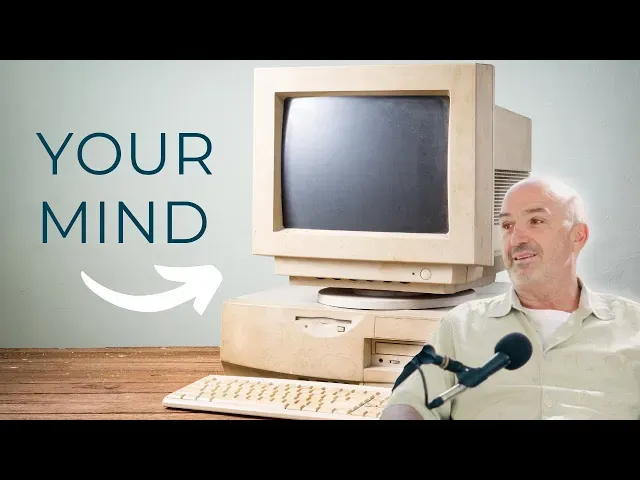
Your mind operates like a tiny filter, conditioning you to live inside an invisible coop. This is what the Toltec tradition calls 'domestication'. But there is a wider, more powerful operating system available in silence. By learning to drop the problems the mind obsesses over, you allow insight to arise naturally. This isn't about giving up anything of value; it’s about dismantling the invisible bars of suffering, one by one, until you can step through into the freedom that is already here.
- Can you feel the difference between the constant chatter in the front of your head and the silent, spacious background that is also here?
- What is one problem you are currently trying to 'figure out' that you could consciously 'drop' and allow information to arise on its own?
- Where in your life do you feel the 'invisible bars' of your conditioning as pain, yearning, or frustration?
TRANSCRIPT
[00:00:01] Keep seeing and checking the background; look for the space that is there. [00:00:08] The human habit is to just be up in the front of the body and in the front of the head. [00:00:18] You put everything through that little filter. Tiny little filter. [00:00:44] Trust that in silence there is a wider operating system—much more powerful, more seeing, peaceful, and lovely. [00:01:15] The way to use the mind is to solve problems you might have in your day. And if you're struggling with a problem, drop the problem and let the information come. [00:01:58] Information would come to him. It would just arise and that's what happens. [00:02:35] The human mind is very limited. The chook doesn't know it's limited. [00:03:04] The thoughts are just looping squawks. [00:03:18] In silence, a 'now' appears, and in the now there's just so much going on. That's enough. [00:04:00] You don't give up anything of value. Everything of value remains. The question is, do you actually know what's valuable? You're conditioned, you're domesticated. [00:05:04] The bars are invisible but are felt as pain, anguish, morbidity. [00:05:50] We make that okay. Retrain the system to feel whatever is going on and be okay with uncomfortable sensation. [00:06:08] It will all pass. Why make a fuss? [00:07:27] Find the invisible bars of the prison. I'm taking them apart.
GLOSSARY
-
Satsang
Literally "Meeting in Truth." It is the direct investigation into our true nature in the presence of an awakened teacher, transcending the separate idea of 'I' or 'me'. -
Non-Duality
The direct recognition that reality is a single, undivided whole. It points to the collapse of the illusion of a separate self, revealing the substratum of pure awareness. -
Self-Inquiry
A core practice of turning attention inward to investigate the source of the 'I'-thought. It is not a mental analysis but a direct seeing of what we are prior to identification. -
Enlightened Teacher
One who abides in the substratum of being and can act as a direct pointer to that reality for others. Their function is not to give knowledge, but to facilitate direct realisation. -
Inner Investigation
The process of looking directly at the mechanics of the mind—its beliefs, patterns, and agreements—without judgment, in order to facilitate their dissolution. -
Pure Awareness
The substratum of being; the silent witnessing that is present before birth and remains after death. It is not an object to be known by the mind, but the very field in which knowing happens. -
Original Dream
Rohan's term for the foundational, continuous awareness from which the dream of the separate self and the world arises. To 'stay with the original dream' is to abide in this source. -
Losing Function
The temporary state where learned social and personal mechanisms drop away during a deep shift in consciousness. It appears dysfunctional from the outside but is part of the dissolution process. -
Bliss Body
The experiential, vibrational quality that accompanies the direct, non-intellectual knowing of your true nature. It is a felt-sense of reality, not just a thought about it. -
Mind and Senses
Treated as a single apparatus that converts the seamlessness of reality into objects, edges, and concepts. This mechanism cannot comprehend true 'nothing' as it is designed to define things. -
The Parasite
A Toltec metaphor for the conditioned thinking mind. It describes the web of self-sustaining thought patterns that feed on emotional energy generated by inner conflict and reactivity. -
Luminous Field
The natural, coherent energy body or 'cocoon' we are born with. According to Toltec wisdom, this field is eroded by social conditioning, a process called 'domestication'. -
Stop the Rot
The crucial first step in practice: to cease all behaviours, habits, and thought loops that feed the 'parasite' and degrade the luminous field. It is the cessation of self-destructive patterns. -
Domestication
The process of social and familial conditioning that installs beliefs, agreements, and identities. In the Toltec view, this process makes our luminous field 'edible' to the parasite. -
Peripheral Vision Training
A practical technique to quiet the mind. By intentionally widening one's field of vision to take in all sensory data at once, the mind's processing power is overloaded, causing internal chatter to cease. -
Neo-Advaita
A modern, often oversimplified interpretation of Advaita Vedanta. It can become a trap when its core tenet, 'you are already enlightened,' is adopted by the ego, leading to spiritual bypassing instead of genuine dissolution. -
Emanation
The palpable field of light or presence that accompanies true Direct Realisation. It is a discernible quality that cannot be faked, unlike intellectual claims, and serves as a test for authentic teaching. -
Persona
The conditioned sense of a separate self; the mask or identity we believe ourselves to be. The work of Inward Engineering is to see through and empty this structure, which blocks the light of realisation. -
Identification
The act of believing you are your thoughts, feelings, or persona. This is the primary obstacle that robs us of the truth, creating the illusion of a separate 'me' where there is only undivided presence. -
Beginner's Mind
A core principle from Zen practice. It means dropping all assumptions and concepts to be fully present with what is. This state of 'not knowing' is crucial for seeing beyond the mind's delusions. -
The Ether
The non-physical, impersonal field from which all thoughts arise and to which they return. Seeing this directly reveals that thoughts are not generated by a personal 'me'. -
Pain Body
An energetic field of compressed trauma, beliefs, and conditioning that acts as a receiver. It is tuned to specific frequencies of thought, causing repetitive mental and emotional patterns. -
Receiver
A metaphor for how the pain body functions. It's not a thinker but a tuner, attracting thoughts from the ether that match its energetic configuration. -
Tuning Fork Analogy
An analogy explaining how the pain body resonates with external thought-frequencies. Like a tuning fork vibrating when another with the same pitch is struck, the pain body 'catches' thoughts it's tuned to. -
Disidentification
The direct seeing that you are the awareness in which thoughts appear, not the thoughts themselves. This breaks the habit of claiming ownership over impersonal mental events. -
Oneness
The resultant state when the pain body dissolves and identification with the separate self ceases. It's the recognition of the unified Substratum of reality, often called Being or God. -
The Rescuer
An archetype, often disguised as benevolence, who interferes with another's suffering. This act is a spiritual robbery, blocking the necessary pain-processing required for awakening and serving the rescuer's own avoidance of discomfort. -
The I
The imaginary sense of a separate self. It's an illusion that has never existed. The foundation of the thinking mind's stories and the source of suffering. What the Buddhists call 'anatta' or no-self. -
Manageable Falsehood
The systems of belief and psychology built upon the imaginary 'I'. They don't point to ultimate Truth but offer ways to manage the illusion, keeping you trapped within it. -
Samsara
The entire dance of appearance and illusion. It’s the world of birth, death, and suffering driven by craving and avoidance, all rooted in the mistaken belief in a separate self. -
Here-Now
The direct experience of Reality as it is, prior to thought, belief, or personal will. It's the simple, profound presence exemplified by a dog in the grass—no past, no future, just This. -
Awareness
The ever-present, silent field in which all thoughts and sensations appear. In Zen, this is called Observer Nature; in Advaita, it's the Sakshi or Witness. -
Dismantling Service
Rohan's term for the function of Satsang. It's not about adding new beliefs, but about deconstructing the egoic structures and agreements you bring to the meeting. -
Contraction
The felt sense of closing, tightening, or resistance in the body-mind when a core belief or blind spot is challenged. This is a key signal for Inward Engineering. -
Beginner Mind
A term from Zen (Shoshin) for approaching practice without preconceptions. It is the willingness to see things fresh, without the filter of past knowledge or self-image. -
Taking it Personally
The ego's mechanism of identifying with feedback or events, creating a story of 'me' being attacked. Dissolving this pattern accelerates the cessation of suffering. -
Wider Operating System
Rohan's metaphor for the silent, spacious awareness that exists beyond the mind's limited filtering. It's a more powerful and peaceful ground of being from which true insight arises. -
Invisible Bars
The unseen conditioning, beliefs, and agreements that create a mental prison. These limitations are felt as emotional pain, anguish, and a constant yearning for something more. -
Domestication
A term from the Toltec tradition describing how we are conditioned by family and society. Our values and limitations are inherited, creating an invisible 'coop' we don't realize we're in. -
The Human Coop
The metaphorical cage created by our conditioning and domestication. We are like chickens, unaware of the limits of our own enclosure until we begin to investigate its bars. -
Drop the Problem
The practice of ceasing active, forced thinking about an issue. This creates space for solutions and insights to arise naturally from the wider operating system of silence. -
Background Checking
The active practice of shifting attention from the 'front-of-head' thinking mind to the silent, open awareness that is always present in the background of experience.
Q&A
-
What does Satsang mean?
Satsang literally means "Meeting in the Non-Dual Truth of Reality." It is the practice of gathering in the presence of an awakened teacher to directly investigate and experience our true nature, which is undivided awareness, free from the illusion of a separate self. -
How can I stop obsessing about the future?
Instead of trying to stop the mind, the teaching suggests a different approach. Through Self-Inquiry, you investigate the 'I' that is obsessing. This shifts the focus from managing thoughts to recognising the silent Presence that is aware of them, which naturally quiets the mind's compulsive activity. -
What are the signs of an authentic spiritual teacher?
An authentic teacher is recognised not just by their words, but by an 'energetic light' that can be directly felt. They don't offer you more beliefs, but instead use skillful means like meditation and inquiry to guide you to your own direct realisation of Truth. -
Can I practice this if I'm not religious?
Yes. The methods used in Satsang, like Self-Inquiry and Inner Investigation, are not based on belief or religion. They are direct, experiential tools for looking at the structure of your own consciousness to see what is true, independent of any ideology. -
What is the difference between being aware of vastness and 'being' the vastness?
The feeling that 'something is aware of the vastness' is the last subtle trick of the mind creating an observer. The transition to 'being the vastness' isn't an action you do, but a collapse of this observer. It is a direct, non-conceptual recognition of yourself as the awareness in which everything appears, not a separate self looking at it. -
Why can't the mind comprehend nothingness?
The mind and the senses operate as a single mechanism designed to create definition. They turn reality into objects with edges. 'Nothing' is the absence of objects and edges, so the mind tries to make it into a 'something'—like a giant empty bag. It cannot process true formlessness, which is why direct experience must bypass the conceptual mind. -
Can spiritual awakening make you dysfunctional?
Yes, a deep awakening can lead to a temporary loss of function. This happens when the learned mechanisms of personality, social conditioning, and identity drop away. From an external perspective it can look like a mental health crisis, but within a supportive context, it's understood as a necessary part of dissolving the old structure to rest in what is real. -
What does it mean to 'stay with the original dream'?
This is a pointer to rest in the foundational awareness from which the dream of a separate self and world arises. It means abiding as the silent witnessing presence itself, rather than getting caught in the stories, thoughts, and perceptions that appear within it. It's a return to the source before the mind creates a world. -
What is the Toltec parasite teaching?
The Toltec parasite teaching frames the conditioned mind as a system of thought patterns that feeds on the emotional energy generated by inner conflict. This shamanistic lens reframes personal suffering as an impersonal process of being 'food' for these draining patterns of reactivity. -
How can I stop feeding the 'parasite' of my mind?
You stop feeding the parasite by 'stopping the rot'—ceasing behaviours that create drama and energise conflict. A key practice Rohan teaches is training peripheral vision. This floods the brain with sensory data, which naturally quiets the part of the mind that needs narrative and rumination to survive. -
What is the 'luminous field' in Toltec wisdom?
The luminous field is the natural, protective energy body or 'cocoon' we are all born with. According to the Toltec lineage, this field is eroded by social conditioning—a process called 'domestication'—making us vulnerable to energetic drain. The core of the work is to rebuild this field so it becomes inedible. -
Is the 'parasite' a real entity?
Whether the parasite is literally true is less important than its function as a practical lens. Using this model helps to externalise destructive patterns, motivating you to stop engaging with them. It shifts the focus from self-blame to pragmatic action, which is a highly effective way to dissolve suffering. -
What is Neo-Advaita and why is it considered dangerous?
Neo-Advaita is a modern interpretation of non-duality that claims 'everyone is already enlightened.' While technically true at a high level, it's dangerous because an identified person can adopt this as a belief, using it to avoid the necessary inner work of dissolving the persona. This creates spiritual bypassing, where a concept is mistaken for genuine realisation. -
How can you tell if a spiritual teacher is authentic?
An authentic teacher has a palpable 'emanation' or field of light and presence that can be directly felt. This cannot be faked with words, charisma, or credentials. A key sign of inauthenticity is when a teacher's words contradict their energy, or when they rely solely on concepts without a transmissible presence. True teaching exposes delusion rather than just offering comforting ideas. -
If I'm already enlightened, why do I need to do any spiritual work?
The ultimate truth is that enlightenment is your nature, but the human experience is one of being 'wrapped up in persona.' This identification is the obstacle that blocks the light of your true nature. The work isn't to 'get' enlightenment but to empty the container—to deconstruct the identifications, beliefs, and patterns of the persona—so that which is already here can be fully realised and lived. -
Where do my thoughts actually come from?
According to Rohan's teaching, thoughts are not generated by a personal self. They are impersonal signals that arise from and return to the 'ether'—an unseen, non-physical field. You don't create them; you perceive them, much like seeing a cloud pass in the sky. -
What is the 'pain body' and how does it relate to thoughts?
The pain body is an energetic field of past traumas, beliefs, and conditioning. It functions like a receiver tuned to specific frequencies. It doesn't create thoughts but resonates with and 'picks up' thoughts from the ether that match its energetic signature, causing repetitive thinking patterns. -
How can I stop identifying with negative thoughts?
The key is disidentification—seeing thoughts as impersonal events, not personal truths. Instead of fighting a thought, investigate its source. By seeing it arise from nowhere and vanish to nowhere, you break the illusion of ownership. Dissolving the pain body's resonance is the ultimate way to stop the signals. -
Are my thoughts really mine?
No. The core insight is that thoughts are ownerless phenomena. The sense that 'I am thinking this thought' is an illusion created by identification. Just as you don't own the birds that fly past your window, you don't own the thoughts that pass through awareness. -
Why is rescuing someone from suffering spiritually dangerous?
From a spiritual perspective, rescuing robs a person of the opportunity to fully feel and process their pain, which is a necessary catalyst for genuine awakening. It is often a selfish act driven by the rescuer's own discomfort with another's suffering, not true service. -
What is the 'rescuer archetype' in spirituality?
The 'rescuer' is someone who intervenes to 'save' others from difficulty, often appearing benevolent. However, this act blocks the person's growth and perpetuates avoidance. In the work of Direct Realisation, the only real obstacles are yourself and a rescuer. -
How does modern culture encourage harmful rescuing?
Modern culture promotes avoiding discomfort through concepts like 'safe spaces' and a deep-seated terror of death. This conditions people to believe that pain is something to be eliminated, rather than a powerful teacher and a gateway to seeing reality as it is. -
What is the difference between rescuing and genuine compassion?
Rescuing aims to eliminate another's pain to soothe your own discomfort. Genuine compassion is the capacity to be present with another's suffering without needing to fix it, holding a space of love that allows them to find their own way through. -
What does it mean to be aware?
Awareness is the silent, ever-present background that is aware of everything. The real work is not to 'get' awareness, but to see through the 'fog' or mental patterns that obscure it. True awareness is prior to the thought 'I am aware.' -
Why is it hard to judge my own level of awareness?
It's nearly impossible because the egoic mind is the one doing the judging. It lives in self-deception, telling you you're either highly advanced or hopelessly behind. Both are stories. The direct path requires honest feedback from outside your own system. -
How do I stop taking feedback personally?
Recognise that what is being pointed at is a pattern, not 'you'. The feeling of being attacked is a bodily contraction. The practice is to own that contraction—to feel it fully without a story. This dismantles the pattern instead of reinforcing the 'me'. -
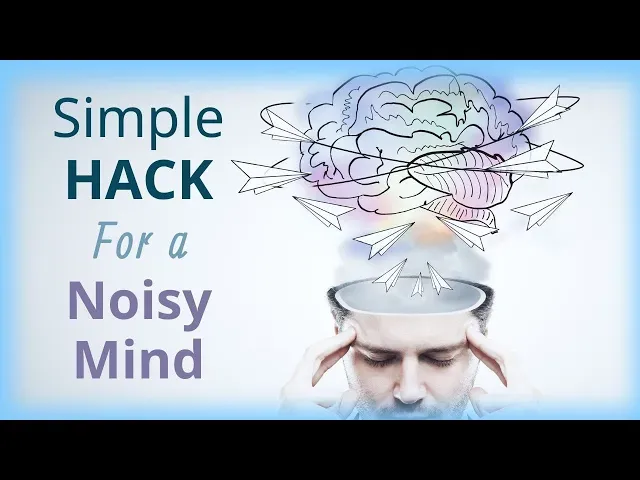
What does it mean that the mind is a 'tiny filter'?
The mind is described as a 'tiny filter' because it processes all of reality through a very narrow lens of past conditioning and learned beliefs. It's like an old, limited computer; we think it's reality, but it's just a small, repetitive system obscuring a much wider, more peaceful field of awareness. -
How can I stop overthinking a problem?
Instead of forcing a solution, the teaching advises you to 'drop the problem.' This means consciously ceasing active, circular thinking and resting in silence. By doing this, you allow insights to arise naturally from a deeper intelligence, much like great thinkers who had breakthroughs when they weren't trying. -
What are the 'invisible bars' of the human mind?
The 'invisible bars' are the unseen patterns of conditioning and social 'domestication' that create a mental prison. They are not physical, but they are felt directly as suffering, anxiety, anguish, and a constant yearning to be somewhere else. The work is to find these bars and dismantle them one by one. -
Why is silence considered a 'wider operating system'?
Silence is called a 'wider operating system' because it is the vast, open field of awareness in which thoughts appear and disappear. Unlike the mind, which is limited and repetitive, this silent background is boundless, peaceful, and holds a far greater intelligence. Trusting it allows for a more direct and effortless way of living.
“There’s nothing to add. What you are is prior to beliefs, thoughts and labels.
Here we explore and unveil the ultimate mystery of non-dual being.
Reality.”