
In This Video:
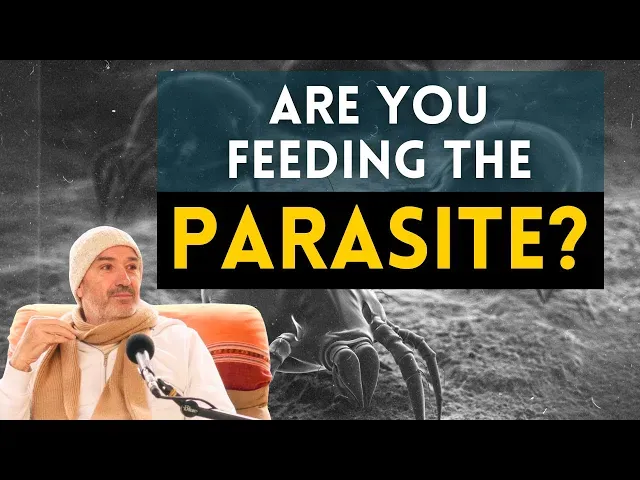
This isn't about finding motivation; it's about seeing what steals your energy the moment you wake. Using a powerful Toltec metaphor, the thinking mind is revealed as a kind of parasite that feeds on worry and trauma by punching holes in your natural 'energy cocoon.' True freedom isn't found by fixing the thoughts, but by starving the mechanism that produces them. By anchoring awareness in the heart-center and applying a ruthless single-pointedness, you can rebuild what was lost and rest in the silence that is your true nature.
- When you first wake, what is the very first thought that appears? Is it your friend, or is it looking for something to feed on?
- Can you feel the difference between the mind's incessant commentary and the silent, aware presence in your heart center? Where do you choose to place your attention?
- What 'fire sticks'—spiritual concepts, practices, or even teachers—are you still holding onto long after they have served their purpose to burn away the old structures?
TRANSCRIPT
[00:00:42] That's the devil thoughts. As soon as you wake up, the mind is there, looking for a problem, looking for something to worry about. [00:00:48] And everyone thinks that's their friend. But it’s not. It has an agenda. [00:00:55] It wants your energy. It wants food. It's a parasite. [00:01:03] The Toltecs describe it like this: humans are born with a cocoon of energy around them. It's luminous, whole. [00:01:12] It's pristine and it's inedible to the parasite. A baby has this. But through life, by injecting beliefs and traumas and fears, it punches a hole, it damages that cocoon. [00:01:25] And then it gets a purchase to start eating. It feeds on the energy that leaks out. [00:01:51] So part of this work is rebuilding that. Starving it. Not by fighting it, but by not feeding it. [00:02:04] When a thought comes that is not loving, not peaceful... look at it. Is that loving? No. [00:02:14] You can just say, 'No thanks. I refuse. I'm not going to be that puppet today.' See it for what it is—an intrusion coming for food. [00:03:44] You have to become very aware of your inner state. Hyper-aware. I was aware of every movement and just stayed there in the heart center. [00:04:18] From there, you can watch everything. You see the dance. You see the attempts to pull you out of the center, but you don't move. And it starts to heal. [00:05:22] The pattern is just a loop. It's looping on itself, trying to get you to believe its story. But it has no real power unless you give it your attention, your belief. [00:07:08] So you have to truly stay stuck to single-pointedness and surrender. Let go. Trust nothing the mind gives you, especially in the beginning. [00:08:10] We use the mind as a tool, like Ramana Maharshi's fire stick, to burn away the rest of the conditioning. [00:08:36] But at some point, we let go of the fire stick too. The tool has done its job. Then you just disappear with it into the Silence.
GLOSSARY
-
The Mind Parasite
A Toltec metaphor for the conditioned thinking mind. It's not a literal entity but a system of beliefs that feeds on your energy by generating fear, worry, and inner conflict. -
Energy Cocoon
From the Toltec tradition, this is the pristine, luminous energy field we are born with. Trauma and conditioning puncture this cocoon, allowing the 'parasite' to feed on our life force. -
Heart Center
The stable, silent inner space of awareness where you can anchor your attention. By observing thoughts from here, you remain unmoved and can dissolve patterns without engaging them. -
Single-Pointedness
A ruthless, unwavering focus of attention. It is the practice of keeping your awareness fixed in the Heart Center, refusing to be distracted by the mind's stories or bodily sensations. -
The Fire Stick
A metaphor from Ramana Maharshi. It represents a tool, like self-inquiry or a specific practice, used to burn away conditioning. Once the job is done, the tool itself is discarded. -
Devil Thoughts
Rohan's term for the initial, intrusive, and often negative thoughts that appear upon waking. They are the 'parasite's' first attempt to secure its food source for the day.
Q&A
-
What is the 'mind parasite' Rohan talks about?
The 'mind parasite' is a powerful Toltec metaphor for the conditioned thinking mind. It describes the system of recurring, negative thoughts that feed on your life energy by generating worry, fear, and internal conflict, keeping you weak and distracted from your true nature. -
How does the mind parasite drain my energy?
According to this teaching, we are born with a pristine 'energy cocoon.' Trauma, fear, and negative beliefs puncture this field. The parasite then 'feeds' on the energy that leaks out by keeping you identified with stories of suffering and lack, creating a self-sustaining loop of depletion. -
What is the 'energy cocoon' in Toltec wisdom?
The energy cocoon is a concept from Toltec shamanism describing a luminous field of energy that naturally surrounds a person. When intact, it is 'inedible' to intrusive forces. The spiritual work involves repairing the holes in this cocoon to restore your innate wholeness and stop energy leaks. -
What is 'single-pointedness' and how does it help?
Single-pointedness is the practice of maintaining a ruthless, unwavering focus of attention. By anchoring awareness in the silent 'heart center' and refusing to engage with distracting thoughts, you cut off the parasite's food supply. It loses its power when it is not fed with your belief and attention.
“There’s nothing to add. What you are is prior to beliefs, thoughts and labels.
Here we explore and unveil the ultimate mystery of non-dual being.
Reality.”