
In This Video:
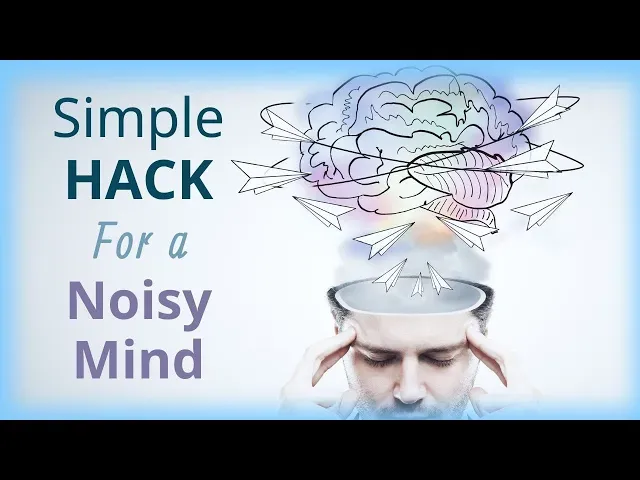
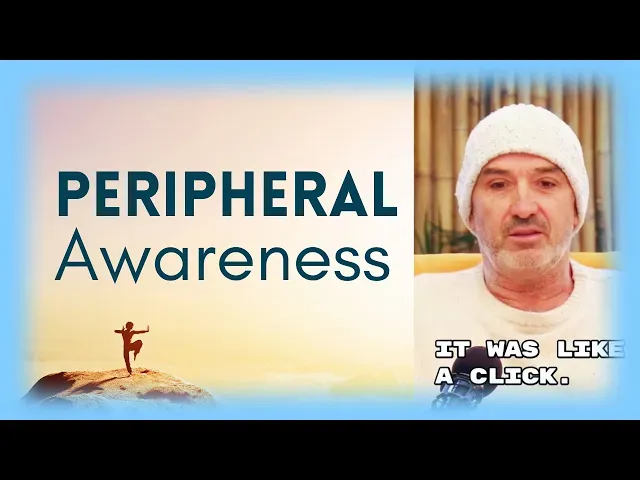
Most meditation requires you to stop what you're doing. The Toltec practice of peripheral vision is different—it's something you can do all day, integrated directly into your life. By flooding the mind with sensory data, it mechanically quiets the internal dialogue and anchors you in direct presence. This isn't a theory; it was the exact practice that led to my first major awakening, a sudden 'click' where the world opened up and the habitual thinker went silent. It's a direct way to use the body's own mechanics to achieve stillness.
- Can you soften your gaze right now and allow your peripheral vision to open up? What happens to the urgency and volume of your thoughts when you do?
- This practice uses small physical anchors, like crossing your toes, to occupy the mind's bandwidth. What tiny, harmless sensation can you introduce to bring you back to now?
- This is a practice for an active life, not a cushion. Where in your daily routine—walking, working, listening—could you apply peripheral awareness instead of habitual tunnel vision?
TRANSCRIPT
[00:00:00] I could practice all day. That was the beauty of the Toltec tradition, it wasn't like you sit down in the morning and evening. It was like you can do this all day. Just work out what your lifestyle is like. [00:00:27] It was the Toltec teaching that I found incredibly powerful. So peripheral vision made sense to me. The idea was, they called the world of form, the tonal. And the invisible world, the nagual, right? The vast emptiness. [00:01:03] In the peripheral vision, what happens is your tonal, or your mind, gets flooded by so much data, it's much harder for you to think, judge, worry, angst, demand. Your brain's only got so much capacity like a computer. If so much of that capacity is taken by the flooding of data around you in reality, you can't do all the harmful things. [00:02:18] It just brings you into now and it's an incredibly powerful practice. But don't, don't, don't do it while you're driving, especially if you're a beginner. [00:03:09] I was driving to Perth in my van... and it just clicked. It was like bang, it clicked open. And suddenly from tunnel vision trying to be peripheral, something practicing, it just went pop. Suddenly, everything in life from that day forth was peripheral. [00:03:42] That was probably the first awakening, but it took years of effort and years of understanding that was an important thing to do. Many teachers who awaken spontaneously give a teaching that is very simplistic. It's a true teaching, but it's for the end of the path. It's not for the beginning. [00:06:54] The problem is mind. If you're cycling through patterns or neural pathways of negative 'I' thoughts, you're solidifying the 'I'. With this practice, those pathways start to thin out because you're not looping in this crap. [00:09:16] There's a deep stillness that comes with complete peripheral awareness. If you move a telescope around this room, what do you see? A blur. Object, object label. There has to be a label with the object. When you're peripheral, that labeling machine slows right down. [00:10:31] Within you is the cosmos. And you want to go get a piece of paper with a number on it. That's your life goal. That's living in the telescope.
GLOSSARY
-
Tonal
The Toltec term for the world of form and labels. It's the everyday reality your mind constructs, object by object. The 'Committee' lives here, constantly judging and naming everything. -
Nagual
The invisible, the vast emptiness or substratum that the tonal appears within. It's the silent reality that the Toltec teachings point to, beyond the thinking mind. -
Peripheral Vision (Practice)
A Toltec technique to quiet the mind. By widening your visual field, you flood the brain with sensory data, leaving less capacity for harmful thought loops. It's an active, all-day meditation. -
The Click
A term for a moment of initial awakening or satori. It's a sudden shift where a practice becomes effortless and seeing reality directly becomes the new baseline. -
Direct Presence
Being anchored in the 'now' without the filter of thought. This isn't a state to achieve; it's what's revealed when mental patterns are interrupted, for example, through peripheral awareness.
Q&A
-
What is the Toltec practice of peripheral vision?
It is an active technique to quiet the mind. Instead of focusing on one object, you widen your visual field to take in everything at once. This floods the brain with sensory data, reducing its capacity for looping thoughts, anxiety, and judgment. -
Can this practice lead to a spiritual awakening?
Yes. For Rohan, years of this practice led to a moment where his perception just 'clicked' into a permanent state of peripheral awareness. It's not instant, but sustained practice can dissolve the patterns that block direct realisation of your true nature. -
Is this a replacement for sitting meditation?
It can be. The beauty of this Toltec practice is that it is designed to be integrated into daily life—while walking, working, or doing chores. It's a way to make your entire life the practice, rather than just a few minutes on a cushion. -
Why does peripheral vision stop the thinking mind?
Your brain has a limited processing capacity. By intentionally filling that capacity with the vast amount of sensory data from your full field of vision, there is simply less 'room' available for the mind to run its usual negative or anxious thought patterns.
“There’s nothing to add. What you are is prior to beliefs, thoughts and labels.
Here we explore and unveil the ultimate mystery of non-dual being.
Reality.”