

In This Video:
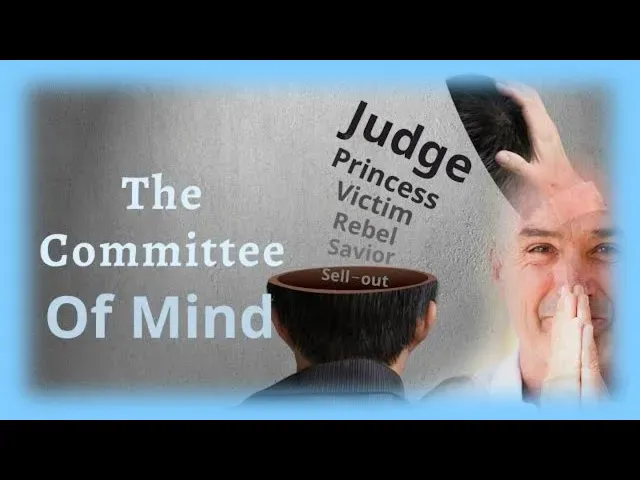
You are not a single voice; you are governed by a committee of six internal characters. In the Toltec tradition, this is called the 'Mitoté'. The Judge is the main character, and its constant commentary fuels the Victim and every other story that creates suffering. The only way out is to stop participating in the drama. By becoming the third-party witness, you can observe the machinery without being caught in it, allowing a space of profound silence to emerge.
- Which of the six characters in your Committee is the loudest today?
- Can you catch the moment of pure sensation before the Judge leaps in with a story about it?
- What would it feel like to simply witness the internal drama without needing to control or fix it?
TRANSCRIPT
00:00 As a third-party witness, we are the observer of these characters playing out. Not the controller, not the stopper. We don't become the hater or the rebellion; we let it all go and observe innocently. And we return to our breath, and we witness the breath. 00:53 You know, in the Toltec mitote, you have a mitote meaning the committee, like, we have a committee in our heads. And when you break it all down, there are only six of them. The judge is the main character. The judge and the victim are the big players. 04:21 And in comes the blame. If the person has a victim orientation the victim story comes in and blames others. It starts with the judge. If we can reduce our judgment back to nothing, there's nothing for the rest of the characters to play on. 05:36 But to catch the judge, we have to be present. We have to slow our life down to see it. So again, we return to the witnessing. We return back to being highly observant. We don't use one of the characters against the characters; we observe innocently. 10:22 Before the story, there is just sensation. Very simple. But the judge can leap in and say 'I don't feel good'. The only way we can discover the judge is to lean back into what we are, and observe, come to our breath and observe the thoughts and the sensations. This way they don't hypnotize us. 12:57 When you are completely in a meditative or mindful state doing something you love, the mitote parts and you feel good. You know why? The committee's having a lunch break. The experience of feeling good is the opening that the hobby provides when the mitote pauses. 13:33 Remain the witness. See the judge and watch the pantomime play out. It truly is a cosmic joke. The perceived importance of these mental narratives exists only because of ignorance.
GLOSSARY
-
The Committee
Rohan's term for the six main characters, or voices, in the mind that create internal conflict and suffering. This is his practical framing of the Toltec concept of the Mitoté. -
Mitoté
A Toltec term for the chaotic fog of voices in the human mind. It's the state of being controlled by the dream of the self, which Rohan identifies as 'The Committee'. -
The Judge
The primary character in the Committee. It operates from personal history and conditioning, its pronouncements triggering all the other characters, especially The Victim, thereby creating suffering. -
The Victim
A key character in the Committee that arises in response to The Judge. Its core function is to assign blame and perpetuate a story of personal injury, keeping one trapped in suffering. -
Third-Party Witness
The state of pure, non-judgmental observation prior to identity. It's the capacity to watch the Committee's drama unfold without getting drawn into it, which is the key to freedom. -
Pantomime
Rohan's metaphor for the dramatic, yet ultimately meaningless, stories and interactions played out by the characters in The Committee. Witnessing reveals this drama as an impersonal show.
Q&A
-
What is the Toltec Mitoté?
Rohan explains the Toltec Mitoté as 'The Committee'—a group of six characters or voices in our head. These characters, led by 'The Judge,' create the constant mental noise, stories, and internal conflict that result in suffering. It's the cacophony of thought that we mistakenly identify as our self. -
Who are the six characters controlling the mind?
The main character is 'The Judge,' which cognises everything from past conditioning. This triggers 'The Victim,' which assigns blame. The other characters that play off these two are the rebel, the princess, the prostitute, and the white knight. Together, they form an internal committee that creates your false identity. -
How do you stop the inner judge from controlling you?
The method isn't to fight or stop the judge with another character. Instead, you must become a 'third-party witness.' By slowing down, returning to the breath, and observing the judge arise without identifying with it, you create a gap. This presence disempowers the judge, as it has nothing to play on. -
Is all judgment bad in spiritual practice?
No, there's a difference between practical and reactive judgment. Practical judgment is essential for navigating life, like driving safely. The harmful judgment pointed to in this teaching is irrational, fear-based, and rooted in memory. It is this habitual, identity-forming judgment that creates suffering and must be witnessed.
“There’s nothing to add. What you are is prior to beliefs, thoughts and labels.
Here we explore and unveil the ultimate mystery of non-dual being.
Reality.”